By Will Johnson
One only needs to look at the results produced by the Saba School of Navigation, to eliminate any doubt as to the results of an education. Sabans were always involved with the sea. It is only natural for a small island surrounded by the blue Caribbean Sea. It is a historic fact that a group of pirates from Port Royal Jamaica led by Edward Morgan, captured St. Eustatius and Saba in 1665. Many of the pirates remained here with likeminded settlers from Scotland, Ireland, England, a few Frenchmen and some native Amerindians. The island was too small for large scale agriculture and so when the pirates settled down, they were dependent on trade. 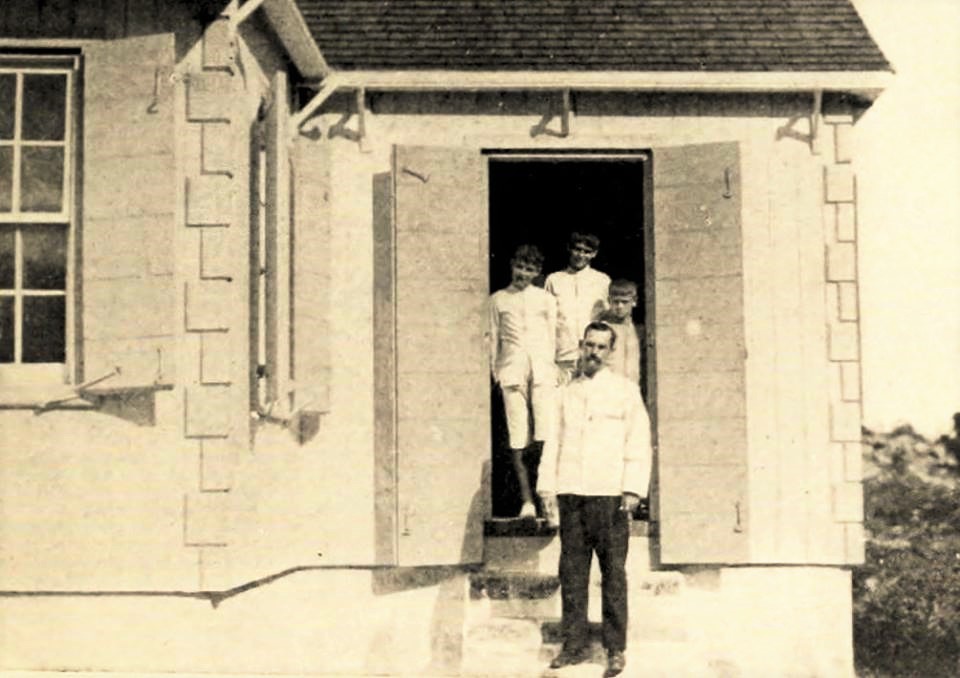
From the early regional harbour records, as well as from other research we see that Saban captains were trading all over. The following is a sample of what these records show.
Old harbour records of St.Maarten indicate already in the early 1700’s how active Saban captains were.
02.08.1729 Barque (Schooner) “Successs”, Master James Simmons arriving from Nevis at St.Maarten with 8000 shingles, 1000 ft planks, 4 cases tobacco, 2 casks of turpentine, 2 casks oil, 4 cases candles.
27.07.1730, Barque owned by Vice Commander Charles Simmons of Saba arrived at St.Maarten via St.Kitts, from Africa with 20 slaves. Captain, Hercules Halley of Saba.
20.05.1735 from St.Maarten to Saba, Commander Charles Simmons, on board another vessel owned by him with Captain William Winfield, having 789 lbs of cotton on board;
11.06.1735, “De Swaluwe” owned by Vice Commander Charles Simmons at St.Maarten with passengers from Saba. Ships arriving at St.Eustatius – 1765.
25th May, 1765, Captain John Simmons of Saba, of the Barkentine “Sally” from Providence Rhode Island with 11 tons of redwood. Duties paid at St.Eustatius 1765. February 3rd. Capt. Hercules Hassell of Saba, the Barkentine “Victory” from St.Thomas, 7 casks of Madeira wine.
Capt. Isaac Simmons of Saba, the schooner “Betsie” to Curacao, with 4000lbs of brown sugar.
Capt. James Green, the schooner “Sally” to North Carolina -890 gallons of molasses.
1760. May 6th, June 5th, and July 3rd. Capt. William Winfield Barkentine “Peter & Rebecca”, Capt. Harvey Hassell schooner ” Drie Gebroeders” trading between Saba, Statia and beyond.
Vessels leaving St.Eustatius June 1779 with Saba Captains:
To St.Kitts – Jacob Johnson
To Saba – William Leverock
To St. Thomas – John Vanterpool (schooner “Drie Vrienden”)
To Guadeloupe – John Winfield.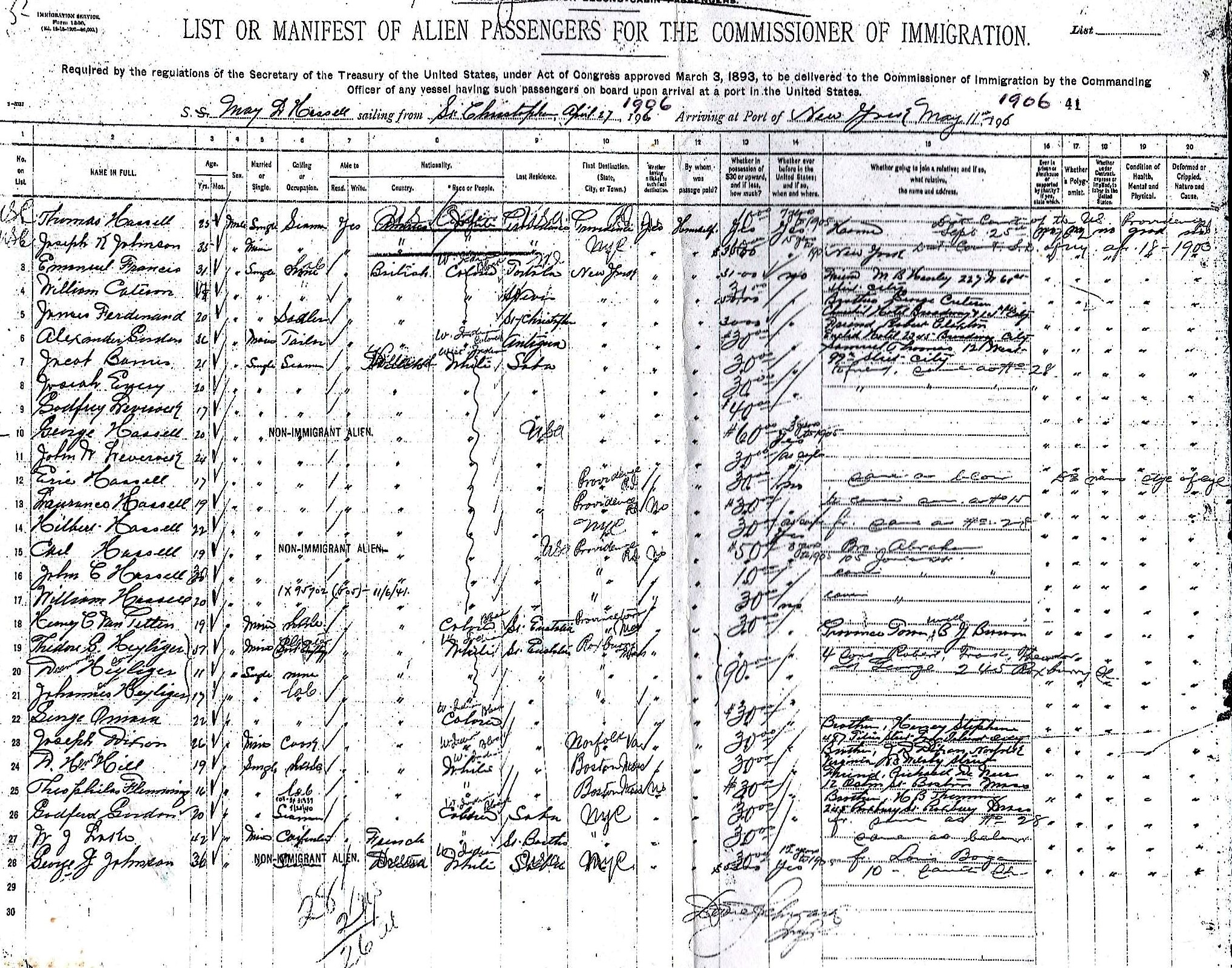
The St. Barths Harbour records give a story of Capt. John James Simmons of Saba. I have his family Bible at my home. He was captain of the schooner “Perseverance.” He married Anne Fantose Taylor of Scotland and they had a large family on Saba. He was suspected of piracy on the Haitian coast in late 1836. Simmons had left St. Barths on October 1st as Master of the Swedish Vessel “Meteor”. He set sail for Saba and later Haiti. After a skirmish with Haitians they returned to St.Barths, left one of the crew ashore and disappeared. He might have gone to Saba according to a government report.
Gosta Simmons, a Swedish researcher, mentions data taken from “The Report of St. Bartholemew” and “West Indies Passport and Citizenry Registers” of St.Thomas Police Station. At the time these islands were under respectively Swedish and Danish colonial rule. The Report which was published between 1804 and 1819 used to list arriving vessels into the port of Gustavia. Besides that, listing of “Sea Passes” given by the Swedish administration occurs too. There are frequently listings, in the beginning, between the Virgin Islands and the Leeward Islands. Smaller craft like schooners and sloops were transporting passengers and goods. At St. Thomas Police Station (or Sheriffs Office) passengers were recorded when entering or leaving St.Thomas. Records exist from the nineteenth century. These records show many Saban captains bearing the names, in addition of those mentioned before of: Beakes, Peterson, Dinzey, Leverock, Blyden, Darsey, Haddocks, Vanterpool, Johnson, Wood, Horton, Heyliger, Beale ( 1805, captain of the “Jumbee”), Abott. Many of these names no longer exist on Saba, but there are those who through the blood and other family ties are proudly related to all of them, the writer being one of them.
The St.Thomas Police station records movement of people as well.
1818.01.26, Richard Dinzey and servant. Miss Susanna Simmons and Eliza Simmons, and Thomas Simmons with servant, arrived from Saba with the sloop “Wasp”, Captain Moses Leverock. They will be staying at J.A. Simmons’ residence.
There are hundreds of these records showing the great amount of schooner and sloop traffic with captains from Saba.
During the revolutionary war in the United States, and when Simon Bolivar was liberating South America from Spanish rule, Saban captains were involved in trade with the rebels.
In 1942, during World War II, “The Sunday Chronicle” in Georgetown, Guyana, carried a story on Saba. It claimed that Prime Minister Winston Churchill had said that in the First World War, the Sabans had done much smuggling for the Germans.
According to the late Mr. Elias Richardson who served as a police officer on Saba in the nineteen thirties, Count Von Lockner, a former German submarine captain, visited Saba on a private yacht to look up several captains whom he had done business with.
This was confirmed when Avalon Hassell (nephew of Carl Anslyn) gave my son Teddy an autographed photo of Count Von Lockner which he had given out while on Saba.
One must remember though that the Dutch were neutral during the First World War. And in the Second World War some of the first schooners sunk by German U boats were owned by Sabans living in Barbados. Schooners like the “Florence M. Douglas” and the “Mona Marie”, owned by the Every’s and the Hassell’s on Barbados.
In 1903 when Dutch Parliamentarian H. van Kol visited the Dutch West Indies, he cried shame on his country for the neglect of the islands. Besides recommending that the Saba population be moved to St.Eustatius to plant potatoes there, he also recommended that lessons in navigation be given.
In 1907 the Minister in charge was finally convinced that the school would be a good thing. He approved some money on the budget as well as instructions as to how the school should be run.
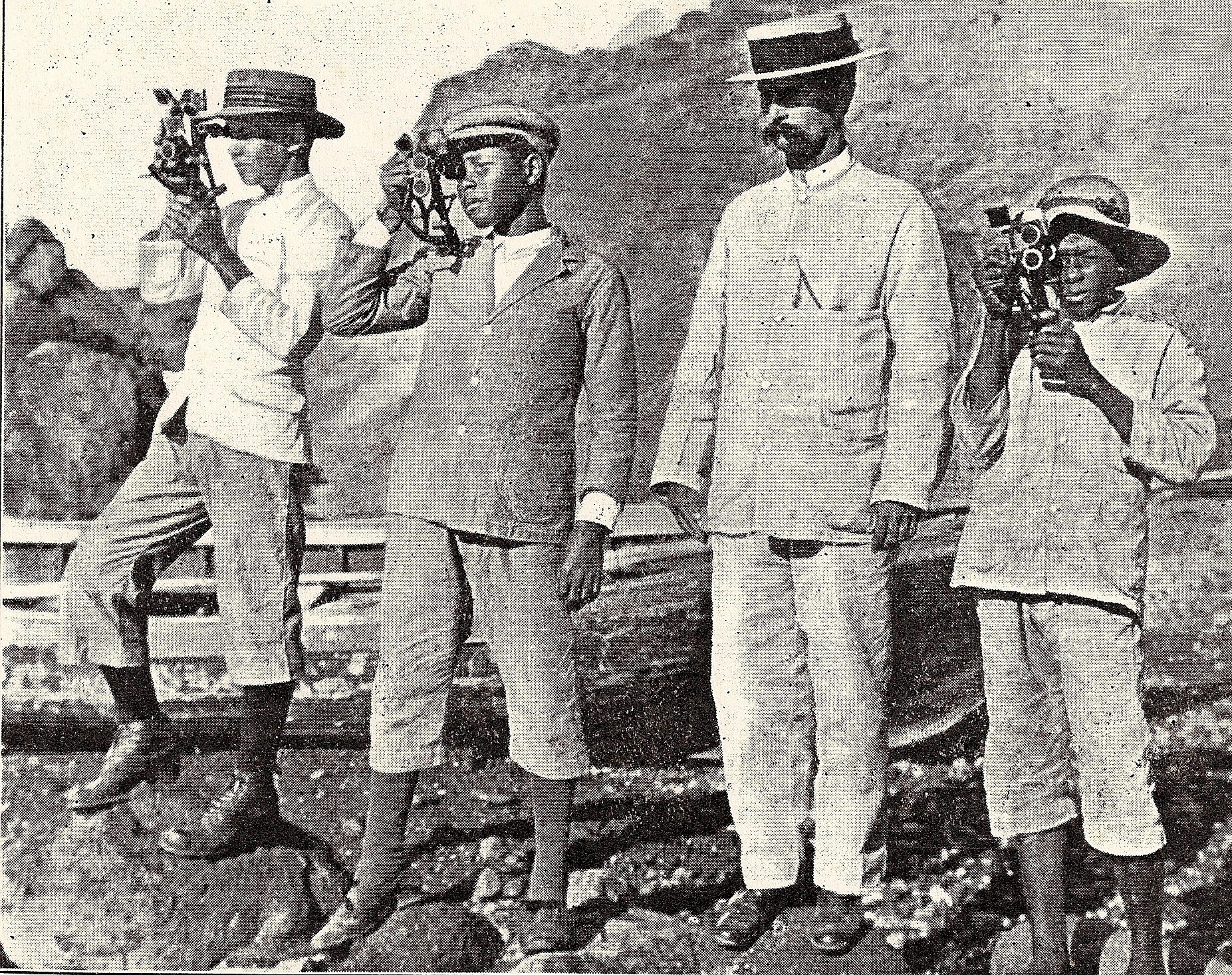
Capt. Frederick Augustus Simmons was given permission in 1909 to start the school and it lasted until 1922 when he became ill and died suddenly.
The school building is now a private home belonging to Mrs. Greta Williams who later sold it to Mrs. Alida Heilbron and is located next to the “Queen Wilhelmina Park” in The Bottom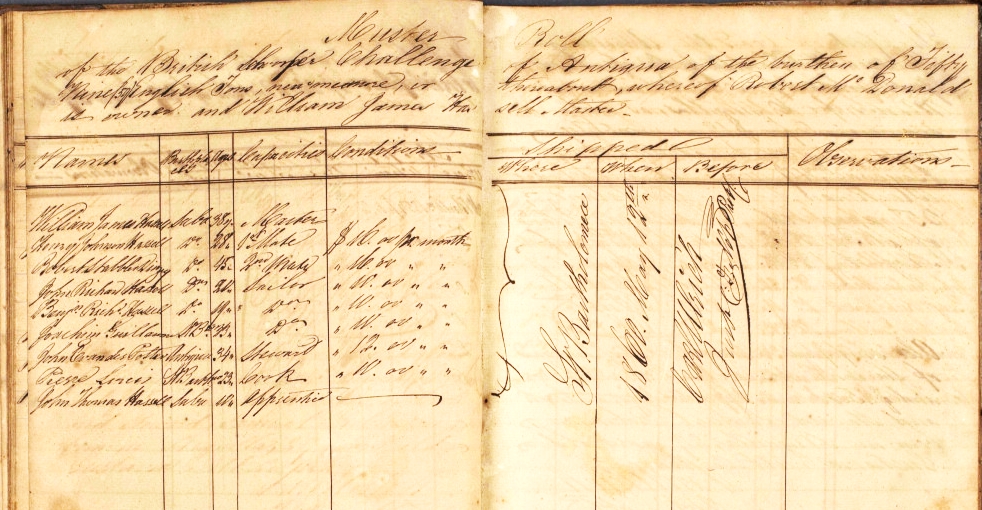 .
.
From that school over 100 young men from Saba graduated. Many of them went on to New York where they took further lessons. With this article is a certificate of one graduate James Eric Simmons. He was born on August 9th, 1892. Jim started his studies at the Navigation School in November 1908 and graduated in the month of May 1909. He was then 16 years and 9 months of age and went to sea. His father Engle Heyliger Simmons was the Notary and Island Secretary and his mother was Emilie Elizabeth Lambert born in Philadelphia of St.Barths parents. Capt. Jim went on to become the Harbourmaster in Santo Domingo during the Occupation of that country by the United States. When President Trujillo took over he moved to St.Thomas where he was a pilot and also the Harbour Master. For a period of at least fifty years all of the harbour masters at St.Thomas were Simmons’ from Saba. Because of the great need for qualified navigators during the First World War there was much interest in the course. Even though the school was in The Bottom classes were also held in Windwardside.
The late Hilton Whitfield one of the students had the following to tell about the schooner trade and his interest in the school. “Augustus (my brother) went with my father to Barbados. My father was the mate of the schooner and he took my brother with him. They used to go on the schooners from Barbados to France, and he was going up on a schooner and he got off in Bermuda, and they sent him back to St.Kitts; and before he reached here he died in St.Kitts, yeah. My other brothers were sailors too. The oldest brother Alexander, he got lost in the Gulf of Mexico coming from Cuba. My brother Kato came here on a four masted schooner first, and then here on one named the Samuel D. Hardaway.”
“My father was away for a long time. He used to sail with a Saba fella around Barbados. He used to go up there Barbados with the schooner and the captains of the schooners were mostly from Saba. He used to sail with them. I stayed with the old lady till after I was finished schooling, and then I start to go to sea on the schooners too.”
“I went down on a next schooner used to run to Curacao, named the “The Three Sisters” with a fella from St.John’s named Captain Will Leverock. I had sailed on her too. I sailed on that schooner.”
” The same like the schooner that Vanterpool had, she used to run the same thing. All of them were from here, the schooners. A next one called the “Diamond Ruby”, I was on her too. Sailing from here around, we went Barbados all around. I keep going on the others. And they had one come from the same Nova Scotia again, here, the Captain was Udalric (Hassell). She had come with a load of lumber. And then we went from here to St.Kitts and from there to Barbados, Demerara. We’d take out the lumber over there, and then we’d load the other stuff to come back to Barbados. But I didn’t stay up there, I came down. That was the “Vivian P. Smith”, that one was named.”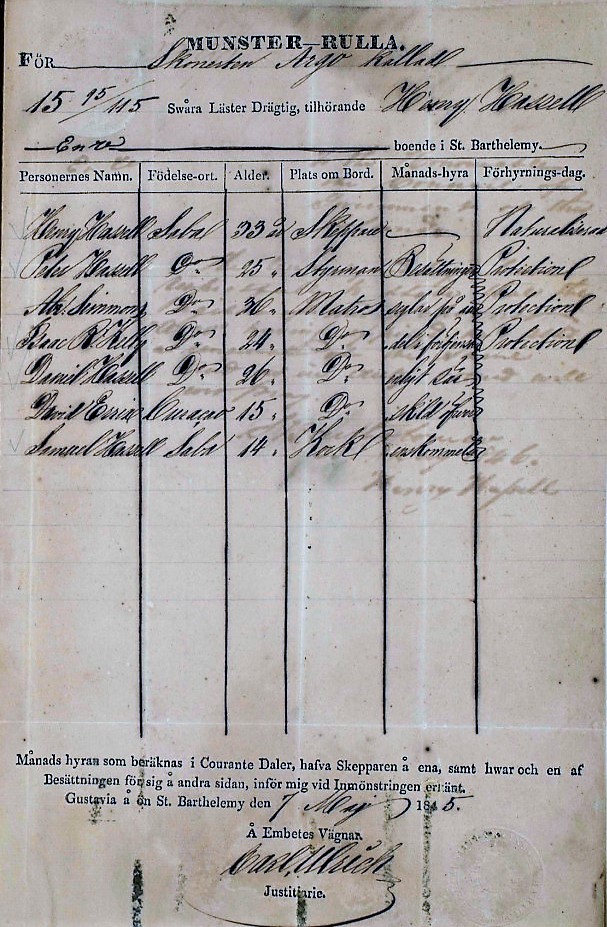
” The first time I sailed with Captain Tommy Vanterpool. All Saba people. The sub-captain that was Herman Simmons. And then Isaac Hazel (St.John’s) and myself as mess boy. And they had Alexander Simmons, Peter Cornet, a next cousin of mine Jason Linzey (Archibald’s father) and a fella Joshua, Matthew’s father. All able- bodied seamen.”
“I had learned a lot of navigation too, in the Navigation School. I was right in the center of the lessons when the schoolmaster what used to teach us died; and they had to go over there in the hill road, you know, and bring me home crying. I thought I could’ve died too cause I was right in the center of the lessons. They had the lessons numbered, I was up to the tenth. Just had to go ten more lessons, and then come back and go over them again, then pass. Twelve o’clock in the day we use to go Under-the-Hill, over there where Nicholson house is now, we used to go over there for twelve o’clock. But four o’clock we used to have to go down on the Bay, on the Fort Bay, to “take the sun.”” Mrs. Annie Simmons-Pamenter had the following to say about the schooner trade and the Navigation School.
” Father”, was educated in Trinidad. He won the scholarship (Commonwealth), but he couldn’t go anywhere because he was a Dutch subject; he couldn’t go further. My grandfather didn’t stay in Saba very long. He was always away with his family -Barbados, Demerara, Trinidad.” “My father and brother both were seafaring men, captains. Father sailed out for many years, but I was so small, young. I know he was sailing out from Georgetown, Demerara and Trinidad, Barbados. My father’s schooners used to be from Demerara about. I suppose about eight in the crew. I know one man especially, who was in his crew. You know Cornelia Heyliger? Well her father-in-law was one of his chief servers. Father was mostly on ships from the fishing business in Demerara and my brother too. Both of them sailed together up there.
They used to come down the islands with cargo, and then Father would drop in on his way up and down. When he went down to St.Thomas about, he would drop in for a few hours. But then he used to come to stay any time, perhaps just a few days – come in on the schooner and stay for a few days. In the schooners’ day they didn’t have much time to stay. He’d come in perhaps today and go. Well, several times when he would come in on a schooner he would give it to somebody else to go to one of the islands with it and he’d stay here with the family for a few days.
“Then (later when retired) he also filled in at the Navigation School. When he would take the Navigation School, I used to go up with him. You know, I was learning navigation too, I was quite interested in navigation. Mr. Frederick Simmons was the one that was really appointed by the government, but father and brother (Edward) used to fill in the places when he was sick, you know. Or if he went away on leave any time they would take over the school. They used to have quite a few boys. They had some from Windward too, and a few from St.John’s. Some of Miss Clemmy’s brothers used to come down here, and different ones from St.John’s and Windward. So after I got married I gave up all this.”
” The Navigation School was only for the schooners. The young men that studied the navigation here they still went to the States, and went in then to study for steam. They knew the navigation, but had to study for steam. They had to study all the necessary things for the steam.
I don’t think many of them took up any other jobs, not that I can remember, because the family that I told you that lived next to me, they had five boys and the two youngest got lost at sea with my uncle. They left the States from Jacksonville, to come out to the West Indies. That was the last we know of them. But they were young; one was twenty- two and the other was sixteen, young boys. Of course, the boys in those days had to go away to work to sea early in life.”
And on that sad note we bring you the story of the Navigation School on Saba (1909-1922) and at the same time pay tribute to Captain Frederick Augustus Simmons.
 THE SABA ISLANDER